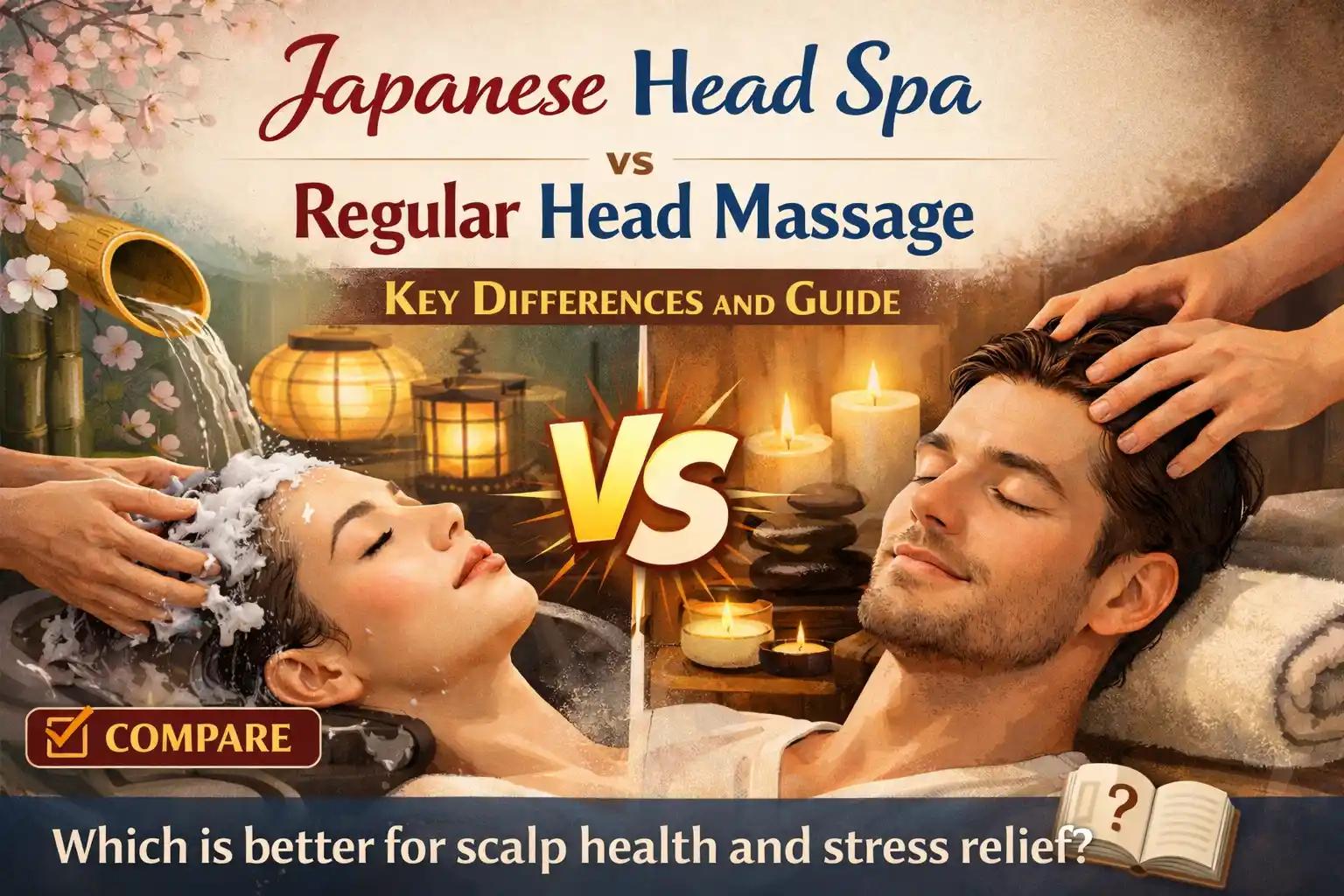
An image of a Japanese Head Spa stirs thoughts of something similar to a head massage, but just more luxurious. In truth, the two apps’ve got some relaxing techniques in common, but they’re designed toward different goals. The head spa is made like skin care for your scalp—deep cleanse, treatment steps, and sensory relaxation—and the standard head massage is all about releasing tension, soothing the mind, and feeling good fast.
If you’re wondering whether to get a Japanese head spa or a regular head massage, there is so much to know: what they’re like, what kind of treatments they include for which types of scalp and lifestyle. You’ll also get to see how the principles of Japanese head massage overlap with those of classic massage methods, and where they very strongly part ways.
What exactly is a Japanese Head Spa?
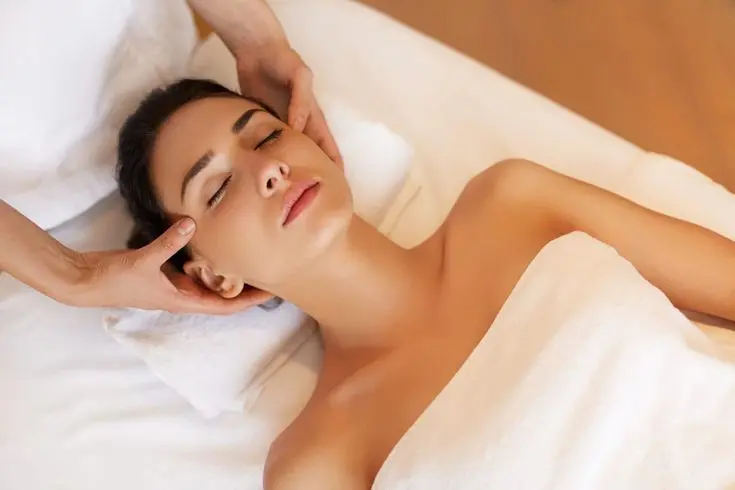
Japanese Head Spa: A Japanese treatment whereby both the scalp and hair are treated in a regimented ritual of hair and scalp cleansing, scalp care, hydration, and massage. But rather than stopping at relaxation, it seeks to remedy scalp conditions like oiliness, buildup, itch, flakes, dryness, or sensitivity — while also providing a deeply relaxing experience.
The adults enjoy a few extra steps in most Japanese head spas, which are more than the usual pan and scan of a massage (the warm-towel lunge form), including:
- A quick chat about scalp issues (oil, dandruff, dryness, and hair loss)
- Scalp-targeted cleansing for excess sweat, sebum, and styling residue
- Light exfoliation or detox (depending on scalp type and sensitivity)
- Steam or hot towels to soften the blockage and facilitate comfort
- A scalp mask or serum designed for your scalp type
- A soothing head + neck (and shoulders) massage – seated and or lying.
- Complete rinsing and finish care for the feel and manageability of hair
Since it marries “treatment + relaxation,” many people hail a head spa as akin to giving your scalp a facial — deeper cleansing of the roots, a lifted feeling in the scalp, and a relaxed mood simultaneously.
What Is a Regular Head Massage?
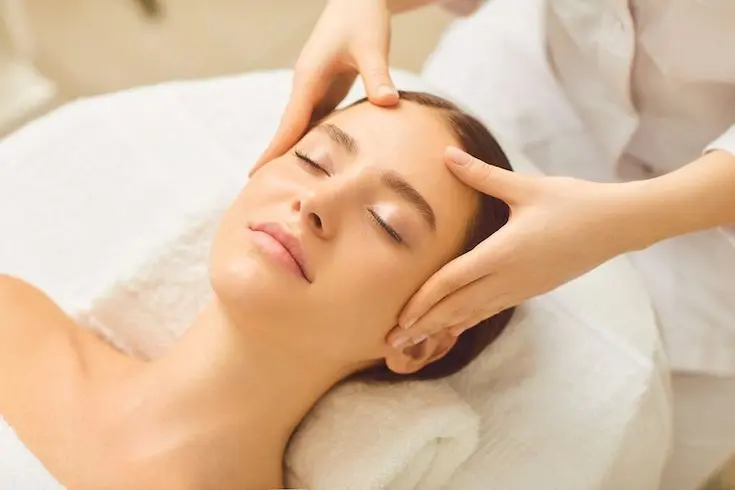
A head massage, in general, focuses on manual relaxation and tension relief. This can be done at a salon, spa, or even at home, and most commonly targets the scalp, temples, forehead, and base of your skull. Many sessions will also incorporate neck and shoulder work, because those are where most of us carry the stress of posture, screen time, and just life on a daily basis.
The routine of a Traditional Head Massage could include:
- Massage through the scalp with circular kneading motions
- Temple rub to relieve tension and headache
- Pressure behind the base of the skull to reduce tension
- Optional shave oils or balms for enhanced glide and comfort
- Mini-add in sessions (think 10-15 minutes) or longer relaxation sessions
Regular head massage usually does not focus on deep-cleansing or scalp treatment products as a Japanese Head Spa would. It’s less about how you feel before and more about how you feel during and after — calm, loose, less stressed.
The Core Difference: Scalp Treatment vs Tension Relief
The easiest way to compare the two is this:
- Head Spa – A Head Spa is a Japanese treatment that combines scalp treatment stages (cleanse, detox, steam, mask) with massage.
- A head massage incentives essentially to mechanically relax and decrease tension.
For some, the differences can be downright profound. Head Spa is often described as making you feel “fresh and reset,” whereas a head massage leaves you feeling “relieved and relaxed.”
1) Step-by-Step Structure: Ritual-Based vs Flexible
Japanese Head Spa is a guided ritual
A typical Japanese head spa tends to go in a consistent order; cleanse, treat, steam, massage, rinse, finish. At least this order does, seeing as the aim is to improve your scalp AND to relax. Steam is regularly employed to loosen buildup and even make treatments feel more effective and comfortable. There is also no rush on rinsing; The water-based ritual can be a high point, as it is said to help the nervous system relax.
Head massage is adaptable
A normal head massage can be short or long, sitting or reclining and maybe even oiled or dry. For some, that flexibility is actually a benefit — it’s easy to slide into a haircut, incorporate into an hour-long body massage or do at home for your usual quick self-care routine. If you’re simply working with stress or a tension headache, head massage gives the work an immediacy that can feel good right from the first moments.
2) Technique Differences: “Massage” Isn’t Always the Same
Even though both services involve touching the scalp, the technique focus often differs.
Japanese head massage technique
Japanese Head Massage Techniques Many of the Japanese head spa treatments are quite rhythmic and balanced. Pressures are generally mild and gentle, focusing on comforting routines that can aid in your relaxation process, following up with the cleansing procedure. The objective is not only to “press out” knots, but also to calm the body and create a clean, comfortable scalp environment.
Regular head massage technique
A more traditional head massage may be one that’s focused on tension points — temples, jaw area, the base of your skull, neck, and shoulders. The pressure may be deeper if the therapist is working on your tightness from posture or stress. Classic head massage . If you suffer from feeling a “tight band” around your head or stiffness behind the neck, a classic head massage can be very satisfying.
3) Product Use: Scalp-Specific Care vs Oils and Glide
Products are another clear separator.
Japanese Head Spa products
A head spa typically uses scalp-focused cleansers, masks, and serums. The scalp is treated like skin, not just “where hair grows.” That means product choices often target:
- Excess oil and clogged follicles
- Dryness and tight scalp feeling
- Itch and irritation
- Flaking and residue
- Sensitivity and imbalance
For those who do use dry shampoo, hair sprays, gels, heavy conditioners or frequent the sea and pools, a Japanese Head Spa can feel especially revitalizing since the cleanse is meant to rinse away buildup completely but gently.
Regular head massage products
Generally head massage will involve use of oils (coconut, almond oil or aromatic herbal oil) and aromatherapy for relaxation. There are certain hair types that oils can be good for, particularly if you have dry hair is your problem. If you have more oily skin on your scalp, or if you are prone to getting acne and buildup on your scalp, the oil-based massaging can sometimes feel like it’s slightly too much and need a proper cleanse.
4) Results You’ll Notice: Clean Scalp Feel vs Relief Feel
People often pick a service based on the outcome they want.
After a Japanese Head Spa
Many people report:
- A lighter, cleaner scalp sensation
- Fresher roots that look less oily
- Reduced itch or scalp discomfort
- Softer hair feel due to treatment and conditioning steps
- Deep relaxation that lasts into the evening
Because the Japanese Head Spa includes cleansing and treatment layers, the results can feel both cosmetic (cleaner roots) and wellness-based (calm and refreshed).
After a regular head massage
Many people report:
- A faster sense of relief from tightness
- Less jaw and temple pressure
- Improved sleep that night
- A calmer mood and reduced stress response
A good head massage can be a “quick reset” for your nervous system, especially if you carry stress in your head, neck, and shoulders.
5) Best Fit by Scalp Type and Lifestyle
Choosing between head spa and head massage becomes easier when you consider your scalp’s behavior.
A Japanese Head Spa is often the better fit if you:
- Experience frequent dandruff or flakes
- Feel itchy, irritated, or uncomfortable at the roots
- Have oily scalp that returns quickly after washing
- Use styling products often (or dry shampoo regularly)
- Want both relaxation and scalp hygiene improvement
A regular head massage is often the better fit if you:
- Mainly want relaxation and stress reduction
- Get tension headaches or tight temples
- Feel stiffness from screen time and posture
- Prefer a simpler service with fewer steps
- Want something easy to repeat weekly (even at home)
Many people combine both: head massage for frequent stress maintenance, and a Japanese head spa for deeper scalp care on a monthly schedule.
6) Which Helps Hair Health More?
Be sure to manage your expectations: not a Japanese Head Spa nor a head massage is guaranteed as the “hair growth treatment.”.. But both can encourage scalp comfort and healthy habits, which does matter: Hair often looks better when there’s less scalp irritation, buildup or stress.
A head spa can support hair health by:
- Removing residue that can block follicles
- Improving scalp balance (oil and hydration)
- Calming itch and irritation that leads to scratching
- Encouraging consistent scalp care habits
A head massage can support hair health by:
- Increasing circulation through manual stimulation
- Lowering stress levels (stress can influence shedding patterns)
- Relaxing tight scalp and neck muscles, improving comfort
If you have very sudden, obvious, or severe hair loss, patchy shedding, or any type of pain in your scalp, professional medical advice is still the best next step. But for those times when you could use a little help, Japanese head massage techniques can be combined with good cleansing to affect.
What to Expect During Your First Head Spa
If you’re new to a head spa, here’s what the experience typically includes (exact steps vary by provider and scalp needs):
- A short consultation about your scalp goals
- A scalp cleanse that feels more thorough than regular shampooing
- Optional steam or warm towel therapy for comfort and softening buildup
- A scalp mask or serum tailored to oiliness, dryness, or flakes
- A relaxing massage across the scalp, neck, and shoulders
- Slow, careful rinsing and finishing products for hair feel
- Drying and simple styling
The biggest “wow” moment for many first-timers is how clean the scalp feels without feeling stripped or overly dry.
How to Choose the Right Option Today
If the best fit is your ultimate concern, choose based on which you value most:
- Take Japanese Head Spa if you have scalp cleanliness, itch, flakes, oiliness, or product build-up as your primary concern — AND a desire for deep relaxation.
- Opt for a head massage when headaches, tension, stress, and tightness are causing your biggest swathe of distress—and you’re in the mood for an immediate service that can adapt to what you need.
For anyone still unsure, a practical approach is to try one Japanese head spa session and pay attention to your scalp the following week: oiliness timing, itch levels, comfort, and how hair behaves at the roots. That feedback generally makes the decision easy.
How often should you book a Japanese Head Spa?
For the most part, people get their best results with treatments every two to four weeks. 2 weeks if you have an oily scalp or lots of hair styling. For dry or sensitive scalps, you can push it to four or six weeks. Regular and gentle shampooing leads to longer-lasting overall results.
Is a head spa better for dandruff and itch?
Often, yes. A head spa involves deep-cleaning, light exfoliation, and scalp masks to mitigate buildup and irritation. If the flakes are due to dryness or product buildup, turnaround can be rapid. Severe dandruff may require medicated shampoo or a doctor’s care.
Can a Japanese head massage help with tension headaches?
It can. The treatment: Japanese head massage. This involves applying firm pressure to the scalp, temples, and back of the skull. This could help relieve tension headaches and jaw tightness. Combine it with neck and shoulder work, hydration, and screen breaks for stronger results today.
What happens during a first head spa session?
Anticipate a consult, scalp skin check, and double cleanse to eliminate oil and dirt. Many sessions also include steam, a custom mask, and a soothing massage on the scalp, neck, and shoulders. You complete with a good rinse, wash, and gentle drying afterwards.
Which option suits oily scalp and buildup best?
For oily scalp and buildup, it’s usually the Japanese Head Spa that takes the cake. It clears the scalp, emulsifies with warm water or steam to loosen sebum, and removes product buildup more thoroughly than massage alone. Opt for a lighter conditioner, and stop slathering on heavy oils between visits.
Conclusion
Japanese head spa and a regular head massage might both feel extremely relaxing, but they’re designed with different end goals in mind. A head spa is a scalp-centric ritual with cleansing, detoxing or exfoliation, steam and targeted masks or serums — plus massage to est… ru the rest of you. A typical head massage targets rapid relief of tension and stress through manual manipulation of the scalp, temples, neck and shoulders. Opt for a head spa if you’re oily, buildy and itchy with stubborn flakes or need to “clean and reset”. Opt for the head massage if you’re feeling frequent headaches, stiffness and day-to-day stress. So many people get the best of both by merging them.